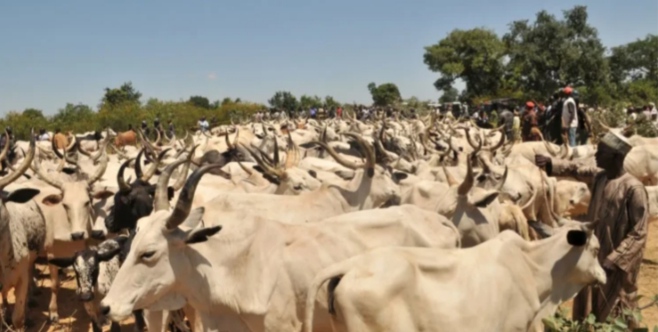
Expressing grave concerns over the plight of pastoralists, leaders of the Fulani community in Nigeria have issued a strong warning, indicating their intention to cease nationwide livestock sales if their grievances remain unaddressed.
The statement, released following the Fulbe National Security Summit organized by the Miyetti Allah Cattle Breeders Association of Nigeria (MACBAN), was delivered by MACBAN’s National President, Baba Othman Ngelzarma.
Ngelzarma underscored the unfair targeting of pastoralists for crimes within the country, alleging inadequate governmental response to the root causes of ongoing conflicts and the challenges facing the Fulani community.
Accompanied by representatives from Tabital Pulaaku International and Fulbe Global Development and Right Initiative, Ngelzarma highlighted the lack of government support for Fulbe pastoralists, who often face discrimination and persecution, compelling them to abandon their traditional livelihoods and ancestral homes.
Key resolutions from the summit included:
- Recognition of President Ahmed Bola Tinubu’s commitment to addressing security challenges by accepting recommendations from the Prof Attahiru Jega-led National Conference report on Farmer/Herder conflict.
- Advocacy for the inclusion of individuals familiar with pastoralist culture on the implementation committee.
- Rejection of criminal activities such as banditry, kidnapping, and cattle rustling, stressing that Fulbe communities are also victims.
- Urgent action on various security challenges affecting Fulani communities, including banditry, kidnapping, socio-economic marginalization, and drug abuse, emphasizing the need for integration through education and social interaction.
- Call for collaboration between Fulbe socio-cultural associations, opinion leaders, and security agencies to counter negative stereotypes and profiling.
- Warning of a potential cessation of livestock sales nationwide if immediate government intervention is not forthcoming.
- Concern over the degradation of grazing reserves and the necessity to preserve and allocate resources for their upkeep to facilitate ranching.
- Recommendation to retain the National Commission for Nomadic Education to ensure access to basic education for pastoralist children.
- Proposal for the establishment of Ministries of Animal Resources at federal and state levels to enhance the livestock industry.
- Affirmation of Fulani citizens’ rights and adherence to ECOWAS trans-human protocol regarding movement.
- Appreciation for the Oyo state government’s inclusive approach to community guard/vigilante groups and urging other states to follow suit.
- Emphasis on education for pastoralist children to foster future productivity and societal contribution.
- Call for a non-kinetic approach to combating banditry, kidnapping, and cattle rustling, acknowledging the limited success of past strategies.
- Concern over the role of unregulated social media in exacerbating conflicts and spreading hate speech, urging government intervention to address this issue.
The communiqué reflects a comprehensive approach to addressing the multifaceted challenges faced by Fulani communities in Nigeria and calls for concerted efforts from all stakeholders to achieve lasting solutions.
 Instant News Blog
Leave a comment