The UK government has announced an increase in the income threshold for sponsoring family members on visas, as part of its efforts to manage immigration.
In a statement released via the official UK Home Office communication platform, it was highlighted that this adjustment marks the largest reduction in legal migration, aimed at establishing an immigration system that prioritizes the interests of British citizens.
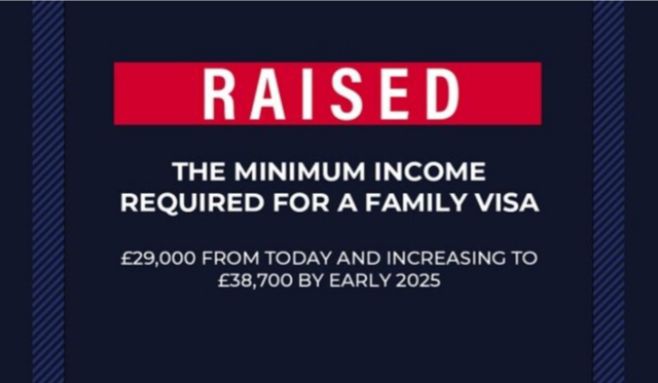
Effective immediately, the minimum income requirement for bringing a family member to the UK will rise to £29,000 ($36,800) from the previous £18,600, with a further increase to £38,700 scheduled for early next year.
Prime Minister Rishi Sunak’s strategy to address what he deems as unsustainable levels of migration involves ensuring newcomers do not place undue strain on public resources.
Immigration has been a contentious issue, particularly in the lead-up to the upcoming general election in 2024, with polls indicating potential challenges for Sunak’s Conservative Party.
Interior Minister James Cleverly emphasized the need for action, framing the measures as necessary to protect British workers and alleviate the burden on taxpayers.
The income requirement is designed to promote self-sufficiency among immigrant families, allowing for various means of meeting the threshold, including through savings and employment income.
In December, the government introduced a series of measures aimed at curbing migration levels, including a substantial increase in the minimum salary for skilled work visas and intentions to align the income threshold for family visas with those of skilled work visas.
Additional regulations targeting students and a significant rise in the health surcharge for foreign nationals utilizing the National Health Service (NHS) were also part of the comprehensive immigration strategy.
Cleverly outlined the overarching goal of reducing annual net migration to the UK, which currently stands at 745,000, by a significant margin of 300,000.
 Instant News Blog
Leave a comment