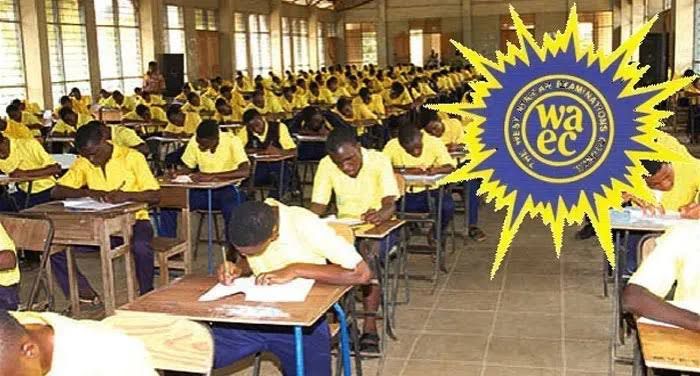
Outrage is growing over the mass failure recorded in this year’s West African Senior School Certificate Examination (WASSCE), with parents, educators, and school owners calling for the cancellation of some papers—particularly English Language—and a thorough investigation into irregularities during the exam period.
Among the loudest voices are members of the Concerned Parents and Educators Network (CPE) and the National Association of Proprietors of Private Schools (NAPPS), who have criticised the conduct of some papers during late-night hours, which they say contributed to the poor performance of candidates.
According to results released on Monday by the West African Examinations Council (WAEC), only 38.32% of the 1,969,313 candidates who sat for the 2025 WASSCE obtained credit passes in at least five subjects, including English Language and Mathematics—a major requirement for university admission. This marks a dramatic decline from the 72.12% pass rate recorded in 2024.
On the CPE platform, parents and education advocates expressed deep concern over the mass failure. In a post, Adegoke Bimpe Atoke wrote:
“WAEC has done it again. The pregnancy of a few months ago has finally given birth—mass failure in Mathematics and English. Candidates wrote 450-word essays using phone torchlights at 10:30 p.m. in the rain, swatting mosquitoes. How did we get here?”
Another parent, Abiodun Adesanya Adeleke, urged WAEC to cancel and reschedule the English Language paper:
“Students were writing exams past 9:00 p.m. with torchlights in mosquito-infested classrooms. How is that a standardised exam?”
A teacher, Adebayo Ifeoluwa, added:
“I teach in a Lagos State school. Exams there started and ended at the proper time. So who allowed exams to run into the night elsewhere? No exam should be written in the dark.”
Rex Oscar, another commentator, questioned the integrity of the results:
“You can’t say over 70% of SS3 students didn’t prepare. Even students who scored high in JAMB failed English. Something is wrong. An inquest is needed.”
Adetoun Aremu and Ifeoma Eucharia also called for a rewrite of both English and Mathematics papers, describing the failure rate as unacceptable despite the efforts of students.
Speaking on Channels Television’s Sunrise Daily, NAPPS National President, Yomi Otubela, condemned the conduct of exams under poor conditions, citing reports of students writing papers by candlelight and torchlight.
“Such conditions are unacceptable and cannot produce commendable results,” he said. “Children should not be writing exams in darkness. The drop in performance reflects systemic issues in our education sector.”
Otubela commended students who managed to perform despite the odds, attributing the decline in pass rate to chronic underinvestment in education, inadequate infrastructure, poor digital access, and lack of teacher training.
“We’ve neglected teacher capacity building. As we approach World Teachers’ Day, we must ask: what have we done to train and equip our teachers to mentor students effectively?”
He also criticised the government’s failure to meet the UNESCO-recommended education funding benchmark, highlighting the wide gap between classroom experience and actual learning outcomes, especially in rural areas.
Meanwhile, an internal WAEC source revealed that the Council introduced stricter anti-malpractice measures this year, which may have contributed to the low scores.
The source explained that the serialisation of objective questions meant no two candidates had the same question sequence, effectively curbing mass cheating.> “What used to be question one for Candidate A could appear as question 20 for Candidate B. This made copying answers nearly impossible, and many students struggled with the objective section,” the source said.
The National Parent Teacher Association of Nigeria (NAPTAN) echoed similar concerns. National President, Haruna Danjuma, blamed the crisis on poor teacher recruitment, rising textbook costs, and the economic hardship facing parents.
“Many states haven’t hired new teachers to fill existing gaps. Parents can’t afford textbooks, and schools are not properly equipped. Teachers are demoralised. How can a hungry teacher give their best?” he asked.
“Parents also need to be more actively involved in their children’s education.”
The widespread reactions underscore a deepening crisis in Nigeria’s education system. While some stakeholders point to stricter exam conditions and anti-cheating measures, others believe systemic failures—ranging from poor infrastructure and inadequate teacher support to questionable exam logistics—are to blame for the unprecedented mass failure.
As the calls for cancellation and reform grow louder, education authorities may be forced to confront the hard questions about the quality, equity, and future of public examinations in the country.
 Instant News Blog
Leave a comment