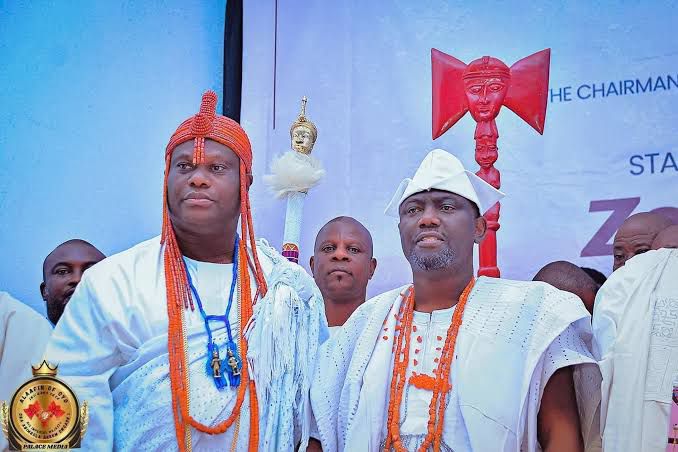
The long-running supremacy debate between the Ooni of Ife and the Alaafin of Oyo has resurfaced, with Alaafin Oba Abimbola Owoade recently questioning the authority of the Ooni, Oba Adeyeye Ogunwusi, to confer Yoruba-wide chieftaincy titles.
In this interview, renowned Ifa priest and cultural icon, Araba Ifayemi Elebuibon, weighs in on the historical context, colonial interference, and the dangers of renewed rivalry.
The Ooni of Ife is regarded as the spiritual head of the Yoruba, while the Alaafin historically wielded political power. How did this duality of roles shape their relationship?
Before colonial rule, there was never a supremacy war. Ile-Ife is the cradle of Yoruba civilisation and the source from which every other throne draws authority. Oyo, on the other hand, expanded the political and territorial frontiers of Yorubaland. The conflict we see today stems from colonial interference and later political manipulation, not from Yoruba tradition.
So where did the idea of rivalry originate?
Traditionally, the Alaafin is like a son to the Ooni, and a son does not disrespect his father. Oranmiyan, who became the first Alaafin, was a son of the Ooni. His military exploits gave rise to the Oyo Empire, but that never made Oyo superior to Ife.
Colonial authorities deepened the division by signing treaties with the Alaafin, but that was their own way of sowing discord. According to Yoruba history and culture, the Ooni remains the most supreme traditional ruler.
Did the rise of the Oyo Empire in the 16th and 17th centuries challenge the Ooni’s influence?
Not at all. Oranmiyan’s achievements were great, but he remained a son of Ile-Ife. The Oyo Empire’s power did not change the fact that Ife is the spiritual source of the Yoruba race. That remains settled in both history and tradition.
How did colonialism and indirect rule affect the balance of power?
The British always created division to maintain control. Their preference for treaties with the Alaafin was part of that agenda. But even during colonial times, when there was a crisis among monarchs in Lagos, it was the Ooni who was asked to intervene. No traditional ruler wore a beaded crown until the Ooni returned to his palace. That shows the Ooni’s unmatched stature.
Some argue the supremacy tussle is driven more by modern politics than history. Do you agree?
Absolutely. Before colonialism and modern politics, there was no such tussle. The Ooni has always been regarded as the father of all Yoruba rulers, including the Alaafin.
How have successive Oonis and Alaafins asserted their authority over the years?
The rivalry between Ooni Sijuwade Olubuse and Alaafin Lamidi Adeyemi was particularly fierce. It nearly split the Yoruba Council of Obas and weakened Yoruba political unity. Their disagreement even extended to who should be the consenting authority for appointing certain monarchs before Osun State was created out of Oyo.
What role have Yoruba people played in fueling or resolving the conflict?
Much of the problem comes from loyalists and courtiers who fan the flames. Today, both Ooni Ogunwusi and Alaafin Owoade are good leaders, but some people around them seem eager to reignite the Sijuwade–Adeyemi rivalry. Unfortunately, this is not in the best interest of the Yoruba race.
How has the rise of other powerful Yoruba monarchs influenced the Ooni–Alaafin dynamic?
We have always had important rulers like the Alake, Awujale, Alara, and others. But none rivals the Ooni in terms of spiritual and traditional authority. The supremacy battle has only been magnified because of the historical weight of the Ooni and Alaafin stools, and because colonial distortions complicated their relationship.
What steps can be taken to end the rivalry and promote unity?
First, those close to the Alaafin’s palace must stop fanning the embers of conflict. Alaafin Abimbola does not need to repeat Lamidi Adeyemi’s confrontational path. Both rulers must prioritise the unity and development of the Yoruba people over personal or throne-based supremacy.
Groups like Oyo Legacy must also tread carefully. Yoruba progress requires harmony, not division. Both rulers know the sacred rites of their thrones, and they understand their responsibilities. The distractions around them must give way to peace.
Can Ifa divination help resolve the conflict?
Ifa always provides guidance in such matters. What is happening now was foretold, and appropriate propitiations were prescribed. Each ruler consults Ifa during festivals and special moments. With the Ooni’s Olojo festival approaching, I am certain prayers will be offered for the peace and unity of the Yoruba nation. Ifa remains a reliable solution to this kind of conflict.
 Instant News Blog
Leave a comment