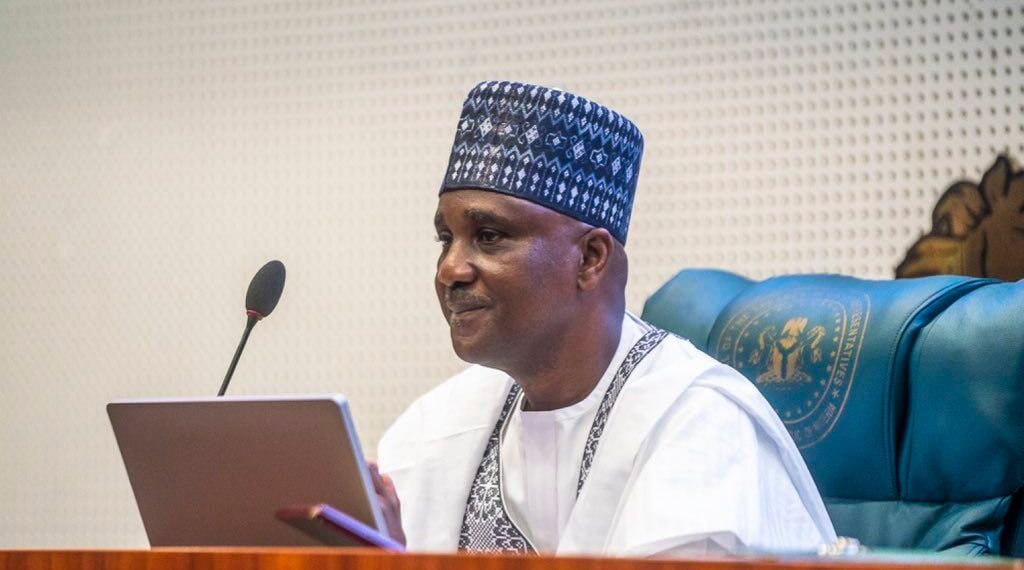
The Speaker of the House of Representatives, Abbas Tajudeen, has declared that the Green Chamber fully supports President Bola Tinubu’s borrowing strategy, describing it as a vital tool for driving economic growth and reducing poverty.
Speaking in Abuja on Monday at the 8th Annual African Network of Parliamentary Budget Offices (AN-PBO) Conference, Abbas dismissed reports that the House was opposed to the President’s borrowing plans, calling them “mischievous and misleading.”
“Recently, a speech delivered by the House Leader at the West African Parliamentary Conference (WAPC) was erroneously and mischievously reported out of context, creating the false impression that the House of Representatives does not support the borrowing strategy of President Bola Ahmed Tinubu’s administration. We wish to state clearly that this interpretation is both inaccurate and misleading,” he said.
Abbas stressed that, like other modern economies, Nigeria must sometimes rely on strategic and responsible borrowing to finance critical infrastructure, stimulate growth, and protect vulnerable populations.
“What is important, and what the President has assured, is that all borrowing remains targeted, transparent, and sustainable, consistent with Nigeria’s Medium-Term Debt Strategy and guided by global best practices,” the Speaker added.
He explained that under Tinubu’s leadership, borrowed funds are being directed towards transformative projects in power, transport, and agriculture to expand revenue-generating capacity, not for consumption.
“The House stands firmly behind the President’s vision of using judicious borrowing as a catalyst for growth and poverty reduction, while simultaneously strengthening oversight mechanisms,” Abbas said.
He highlighted the establishment of the National Assembly Budget and Research Office (NABRO) as a key reform to provide independent analysis on borrowing, debt sustainability, and fiscal policy.
At the same time, Abbas noted that borrowing alone was insufficient, stressing the need to plug leakages caused by corruption and illicit financial flows. According to him, Nigeria loses about $18 billion annually to financial crimes, roughly 3.8% of GDP.
The Speaker maintained that responsible borrowing, backed by strong oversight and anti-corruption reforms, was necessary to safeguard Nigeria’s economic future.
 Instant News Blog
Leave a comment