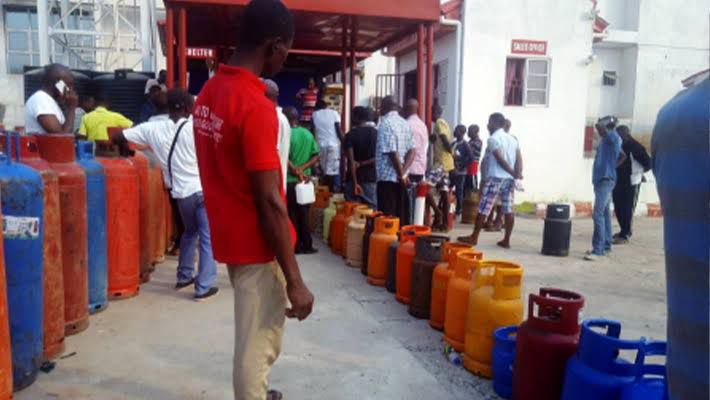
Nigerians have raised fresh concerns over another surge in the price of cooking gas, with a kilogram now selling for as high as ₦2,000 and in some areas, up to ₦3,000.
However, gas marketers have clarified that the increase is not the result of any official price adjustment but rather a temporary market disruption worsened by profiteering among some operators.
The Nigerian Association of Liquefied Petroleum Gas Marketers (NALPGAM) attributed the price hike to short-term supply constraints and speculative pricing.
Speaking on Channels Television’s The Morning Brief on Wednesday, the association’s National President, Oladapo Olatunbosun, said the surge followed recent disruptions caused by a strike by the Petroleum and Natural Gas Senior Staff Association of Nigeria (PENGASSAN), which affected operations at the Dangote Refinery.
“I sympathise with Nigerians because we never intended to have a situation like this,” Olatunbosun said.
“There has been no official increase in the price of cooking gas. What is happening is that some marketers are taking advantage of the temporary shortage in supply and the market forces that have increased demand. They are cashing in to make quick money, which is wrong.
“We frown at this as an association, and I’m happy that, by the grace of God, normalcy will return in the next few days.”
According to Channels TV, the price of Liquefied Petroleum Gas (LPG), which previously averaged between ₦1,200 and ₦1,300 per kilogram, has risen sharply to between ₦1,700 and ₦2,000 and in some cases, up to ₦3,000.
Olatunbosun described the development as artificial and temporary, assuring that supply and prices would stabilise soon.
He explained that the situation began when Dangote Refinery, which had previously helped ease supply by selling directly to offtakers, commenced maintenance work that slowed truck loading.
“Before the strike, Dangote was dispatching about 50 trucks per day, which adequately served the South-West and parts of the North. Combined with supplies from Apapa and other depots in Lagos, the market was well balanced,” he said.
“But when Dangote began maintenance, trucks started spending up to 14 days before loading. Marketers switched to Apapa, but when the PENGASSAN strike began, vessel discharges and inspections were disrupted, and stocks quickly dried up.”
He added that while the refinery has since resumed operations and the strike has been called off, the backlog from the delay led to a brief shortage — particularly in the South-West, which consumes the largest volume of LPG in Nigeria.
Olatunbosun also noted that Nigeria’s national LPG consumption has grown from about 1.2 million metric tonnes three years ago to nearly 2 million metric tonnes, meaning any supply disruption now has wider ripple effects.
He urged consumers to purchase gas only from registered plants, warning that those buying through middlemen or roadside vendors risk paying inflated prices.
“If you buy from a third or fourth party, the price will naturally go up. But if you go directly to registered gas bottling plants, the maximum you should pay today is between ₦1,000 and ₦1,300 per kilogram, depending on location and logistics costs,” he explained.
“Before this artificial scarcity, prices were between ₦950 and ₦1,050. The current hike is temporary, and we are already working with relevant authorities to stabilise supply.”
The NALPGAM president assured Nigerians that normal supply levels would resume shortly as vessel discharges and truck loading operations return to full capacity.
 Instant News Blog
Leave a comment