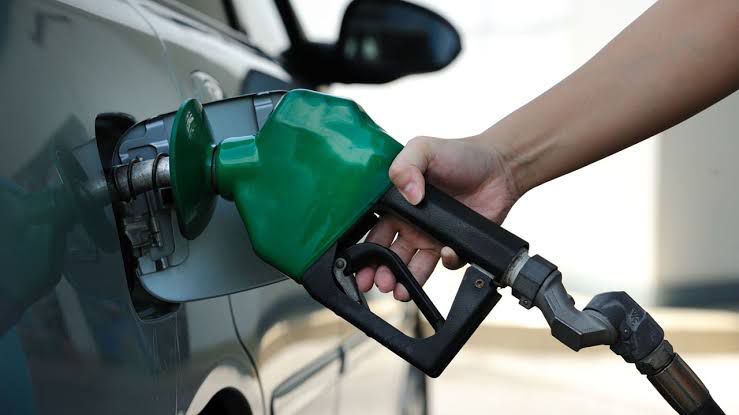
Petroleum marketers have warned that the pump price of Premium Motor Spirit (PMS), popularly called petrol, could exceed ₦1,000 per litre following President Bola Tinubu’s approval of a 15 per cent ad valorem import tariff on petrol and diesel imports.
The new tariff, which takes effect after a 30-day transition period ending November 21, 2025, is part of the Federal Government’s strategy to protect local refiners and reduce the influx of cheaper imported fuel that threatens domestic refining investments.
However, industry operators fear that the measure could backfire, worsening inflation and pushing fuel prices further beyond the reach of ordinary Nigerians.
Several depot operators, who spoke with The PUNCH under condition of anonymity, said the policy could raise the pump price of petrol, which already sells for between ₦900 and ₦950 per litre in parts of the country.
“As it is, the price of fuel may go above ₦1,000 per litre. I don’t know why the government is adding to people’s suffering,” one depot operator lamented.
Another operator said the industry’s pricing behaviour suggests some level of coordination among major players.
“Some importers are working in alignment with Dangote. That’s why the last price increase was uniform — everyone adjusted at once. We’ll just have to see what happens next,” he said.
Operators also cautioned that, without a clear regulatory framework to stabilise prices and ensure fair competition, the tariff could trigger fresh rounds of fuel scarcity and price spikes.
The National Vice President of the Independent Petroleum Marketers Association of Nigeria (IPMAN), Hammed Fashola, acknowledged that while the tariff could promote local refining, it might also lead to short-term hardship.
“The 15 per cent tariff has both positive and negative effects,” he said. “It could discourage importation and promote local refining, but people will also see it as an attempt to monopolise the sector in favour of certain players.”
Fashola warned that if local refineries failed to meet national demand, the policy could trigger another round of scarcity.
“If local refiners can’t supply enough, it will have serious implications. People won’t have alternatives,” he added.
He, however, urged the Nigerian National Petroleum Company Limited (NNPCL) to expedite efforts to rehabilitate the Port Harcourt, Warri, and Kaduna refineries, noting that competition among refineries would ultimately stabilise prices and dispel fears of monopoly.
Similarly, the National President of the Petroleum Products Retail Outlet Owners Association of Nigeria (PETROAN), Billy Gillis-Harry, described the policy as a “win-win” measure that would be tested over time.
“We’re focused on availability and affordability,” he said. “If we insist on cheap fuel while driving everyone out of business, products will become scarce, and prices will rise even higher.”
It was earlier reported that President Tinubu approved the 15 per cent ad valorem import duty through a letter dated October 21, 2025, addressed to the Attorney-General of the Federation, the Federal Inland Revenue Service (FIRS), and the Nigerian Midstream and Downstream Petroleum Regulatory Authority (NMDPRA).
The letter, signed by Damilotun Aderemi, the President’s Private Secretary, conveyed Tinubu’s approval following a proposal by FIRS Executive Chairman, Zacch Adedeji, who recommended the duty to “align import costs with domestic market realities.”
According to projections in the memo, the tariff could raise the landing cost of petrol by about ₦99.72 per litre, translating to an additional ₦1.92 billion daily in import costs and government revenue, based on an average daily consumption of 19.26 million litres.
The document stressed that, even after the adjustment, Lagos pump prices would remain around ₦964 per litre ($0.62) — still below regional averages in Senegal ($1.76), Côte d’Ivoire ($1.52), and Ghana ($1.37).
Adedeji explained that the measure is part of the Renewed Hope Agenda to boost local refining, stabilise prices, and strengthen the naira-based oil economy.
He added that the policy, backed by Sections 21 and 22 of the Petroleum Industry Act (PIA), is not revenue-driven but corrective, aimed at closing the pricing gap that allows duty-free imports to undercut local refineries.
“Our goal is to protect consumers and local producers from unfair pricing practices while ensuring a level playing field,” the FIRS boss said.
The NMDPRA spokesperson, George Ene-Ita, confirmed that the agency would implement the new tariff once it receives official communication from the presidency.
“Once the policy comes into force, we’ll midwife the process on behalf of the government,” he told newsmen.
“Prices may rise, remain stable, or even drop depending on market competition. I don’t foresee a sharp increase, as stabilisation mechanisms would have been considered.”
Energy expert Olatide Jeremiah warned that the policy could create short-term instability, adding about ₦100 per litre to the landing cost of petrol and diesel.
“While it could boost government revenue and local refining, the policy may also lead to unfair competition and temporary energy insecurity,” he noted.
A prominent APC chieftain and oil magnate, Chief Ayiri Emami, faulted the move, describing it as “anti-people” and urging the President to suspend its implementation.
“This kind of policy won’t hurt marketers; it will hurt ordinary Nigerians,” Emami said at a press briefing in Abuja. “People are already hungry. Why add another burden?”
He warned that fuel costs had already crippled livelihoods in rural and riverine communities dependent on fishing and transportation.
“It’s not that fish are gone — we just can’t afford to reach them anymore,” he added.
On social media, Nigerians were divided.
While some users saw the move as necessary to protect domestic refineries, others called it an indirect monopoly in favour of Dangote Refinery.
User @Rufyb criticised the move as “anti-market,” writing:
“You got FX allocations at special rates to build a refinery, fine. Produce and compete. Why tax others out of the market?”
Conversely, @markessien praised the tariff as a “good step” that would safeguard Nigeria’s emerging refining industry.
“Nigeria finally has a working refinery. Imported fuel should attract tariffs,” he wrote.
 Instant News Blog
Leave a comment