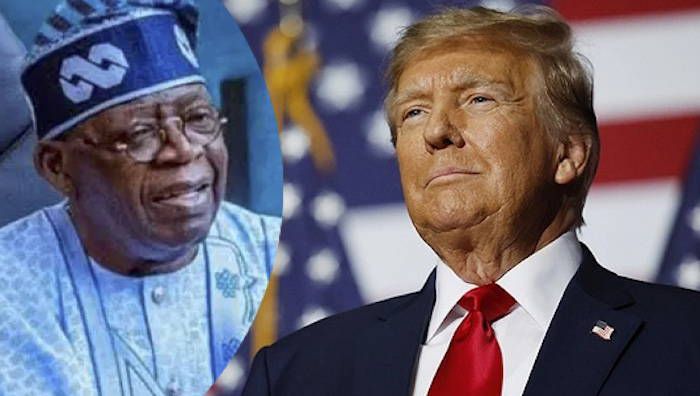
The Presidency has announced that President Bola Ahmed Tinubu will meet with U.S. President Donald Trump in the coming days to discuss allegations that Christians in Nigeria are being systematically targeted.
Daniel Bwala, Special Adviser to the President on Policy Communication, said the planned discussion, which may take place at either the State House in Abuja or the White House, will centre on counterterrorism cooperation and “clarifying misconceptions about the nature of terrorist attacks in Nigeria.”
The announcement follows a series of high-profile interventions from Washington. On Friday, Mr. Trump redesignated Nigeria as a “country of particular concern” over claims of mass killings of Christians and in recent public posts warned he had asked the Pentagon to plan possible military action and to consider suspending U.S. aid if the killings continue.
Those moves were prompted in part by earlier appeals from U.S. lawmakers, including Congressman Riley Moore, who in an October 6 letter urged the State Department to restore Nigeria’s CPC status and to suspend arms sales until the Nigerian government shows “tangible commitment” to ending violence against Christian communities.
Mr. Bwala stressed that the two leaders share a commitment to tackling insurgency and terrorism. He said the meeting will be an opportunity to review existing cooperation and to address what the Presidency describes as a misleading narrative that terrorists in Nigeria target only Christians — pointing out that victims come from multiple faiths and that the country’s security challenges are complex.
The Federal Government has repeatedly rejected characterisations of the violence as a one-sided “genocide,” arguing that attacks are driven by insurgency, communal conflicts and criminality and that both Christians and Muslims have been killed. Abuja has also warned that any external military action would raise serious concerns over Nigeria’s sovereignty.
Analysts say the situation is complicated: groups such as Boko Haram and Islamic State West Africa Province have long fuelled violence in the northeast, while farmer-herder clashes and local criminal gangs drive unrest in other regions. Independent violence trackers and researchers have cautioned that some public claims about the scale and sectarian nature of killings risk oversimplifying the data.
The prospect of a bilateral meeting between the two presidents comes as officials on both sides seek to manage a diplomatically fraught moment. Nigeria has welcomed international support against Islamist insurgents so long as assistance respects its territorial sovereignty, while Washington faces domestic pressure from politicians and interest groups demanding tougher action over religious-freedom concerns.
 Instant News Blog
Leave a comment