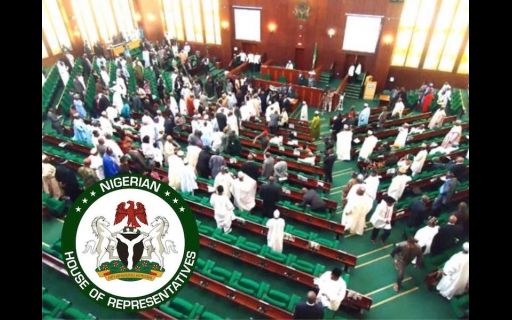
Proceedings at the House of Representatives were abruptly adjourned on Tuesday amid rising tension over the 2026 budget, leaving the day’s 30-item Order Paper completely unattended.
The rare adjournment, last seen only when the chamber suspended sittings in honour of a deceased member, followed a heated closed-door session that preceded the day’s plenary. Lawmakers reportedly exchanged sharp words over issues linked to the handling of the 2026 appropriation process and the federal government’s N1.15 trillion loan request.
The House is expected to reconvene today (Wednesday) to resume legislative business, with the loan proposal likely to top discussions.
Tuesday’s Order Paper listed 30 bills for first reading, 16 reports for consideration, eight bills for second reading, and six motions for debate and possible adoption. Proceedings had begun with the arrival of Speaker Tajudeen Abbas and principal officers, after which the lawmakers moved into an executive session that lasted for about an hour.
Though no official explanation was given for the adjournment, insiders said the meeting centred on the expiration of a one-week ultimatum earlier issued to the Ministers of Finance, Budget and National Planning, and the Accountant General of the Federation, to settle outstanding debts owed to indigenous contractors.
Tension reportedly escalated when Ifeanyi Uzokwe, a member from Anambra State, repeatedly sought recognition to raise a point of order but was ignored by the Speaker. Instead, Abbas proceeded with routine announcements, including a notice of an emergency meeting of the South-West caucus. Uzokwe’s persistence prompted the Speaker to ask him to approach the chair privately. Moments later, House Leader Prof. Julius Ihonvbere moved a motion for adjournment, which was swiftly adopted.
Presidency sources revealed that President Bola Tinubu had expected the House to approve his administration’s request to borrow N1.15 trillion to fund the 2025 budget deficit. However, that expectation was dashed after aggrieved lawmakers allegedly refused to consider the request over unresolved issues surrounding members’ welfare and constituency funding.
President Tinubu’s formal request, conveyed in a letter to the House last week and read by Deputy Speaker Benjamin Kalu, sought parliamentary approval for the borrowing plan. The correspondence, also presented at the Senate by Senate President Godswill Akpabio, cited Section 44(1–2) of the Fiscal Responsibility Act, 2007, as the legal basis for seeking legislative approval.
The letter partly read:
“I write to kindly request the approval of the National Assembly to establish a N1.15 trillion borrowing programme in the domestic debt market to close the unfunded deficit gap created by the increase in the budget size over and above the prior approved revenue and borrowing plans.”
President Tinubu noted that the National Assembly had raised the 2025 budget from N49.74 trillion to N59.99 trillion, creating a N14.10 trillion deficit that must be financed.
At the heart of the discontent is a viral message posted on the House’s WhatsApp group by Ismaila Dabo, member representing Toro Federal Constituency, Bauchi State. The post, titled “My concern and the sad reality about the 10th National Assembly,” exposed internal grievances about members’ financial struggles and growing inequality within the chamber.
Dabo lamented that despite the National Assembly’s budget rising from N160 billion at inception to about N360 billion in 2024 and 2025, many lawmakers are struggling to meet personal and constituency obligations.
“The majority of members cannot afford to pay rent, travel to their constituencies, or repay loans. Local moneylenders are pursuing members over unpaid debts. Many have even been dragged to court,” Dabo wrote.
He faulted the proliferation of committees under Speaker Abbas, arguing that the practice had weakened legislative oversight.
“More than five committees often oversee a single ministry or agency, asking the same questions and inviting the same officials. These agencies have stopped taking us seriously,” he stated.
The Bauchi lawmaker further decried the “alarming disparity” between the allocations of ordinary members and principal officers.
“Imagine a Principal Officer executing projects worth over N50 billion in your state, while you struggle with an unfunded N1.1 billion portfolio. The imbalance is unsustainable,” he said.
To address the crisis, Dabo proposed increasing members’ monthly allowances from N12.5 million to N30 million, reducing the number of standing committees, and ensuring a fairer distribution of budgetary provisions.
“If these issues are not urgently addressed, the 10th Assembly risks becoming the weakest in Nigeria’s democratic history,” he warned.
Multiple sources confirmed that the Speaker, in response to the outburst, denied allegations of financial mismanagement. He reportedly invited Hon. Amos Daniel, Chairman of the House Committee on Services, to give an account of the N120 billion increase in the 2024 National Assembly budget.
According to the explanation, the funds were channelled into capital projects, including the construction of car parks, a National Assembly hospital, a recreation centre, and procurement of official vehicles.
However, several members reportedly expressed outrage over the alleged purchase of standing fans and dustbins from the allocation, describing the expenditure as “insensitive” in the face of lawmakers’ financial distress.
Efforts to obtain the House’s official position proved unsuccessful, as spokesman Akin Rotimi did not answer calls or respond to messages sent to his phone and WhatsApp. Messages to Hon. Amos Daniel were also left unanswered as of press time.
 Instant News Blog
Leave a comment