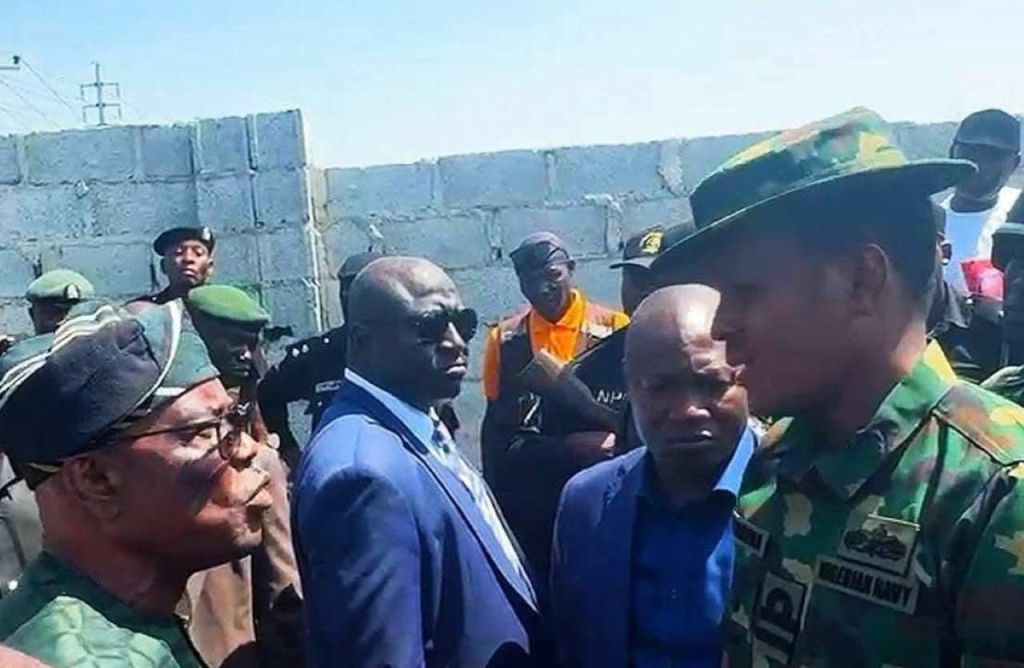
A viral video showing the Minister of the Federal Capital Territory (FCT), Nyesom Wike, in a heated confrontation with military officers over a disputed plot of land in Abuja has sparked widespread online commentary. But beyond the humour and memes, the incident has exposed a deeper and more troubling issue in Nigeria’s financial system: banks are increasingly rejecting land and property as collateral due to escalating uncertainty over land ownership.
Although the video has trended for days, financial experts say it reflects a crisis that has been quietly reshaping lending practices for years. Land, once regarded as the strongest and most secure form of collateral in Nigeria, has now become one of the riskiest assets in the eyes of banks.
A senior banking executive, who spoke to the Nigerian Tribune under anonymity, expressed concern that many Nigerians do not grasp the severity of what the viral confrontation represents.
“If people truly understood how money works, they wouldn’t be laughing,” he said. “The Wike–Naval officer standoff is exactly why banks are tightening lending policies and turning down land-based collateral, especially in cities like Abuja and Lagos.”
He described a growing trend in which banks now prefer trust-backed or government-guaranteed instruments over landed property.
“Imagine a businesswoman who owns a plaza in Abuja,” he explained. “She applies for a ₦200 million loan and presents her land documents. The bank refuses, not because the land lacks value, but because one government announcement can revoke that title and erase the value overnight.”
He noted that the viral video illustrates the problem clearly: two powerful institutions, the FCT administration and the military, laying claim to the same property with full confidence.
“That kind of ambiguity instantly destroys the asset’s bankability,” he said. “If a business pledges such land as collateral and government later claims ownership, the collateral becomes worthless. The bank loses. The entrepreneur loses. Ultimately, the entire economy suffers.”
Experts say this growing uncertainty has quietly contributed to the collapse of many small and medium-scale enterprises unable to secure loans without dependable collateral.
Frequent land revocations, overlapping allocations, double issuance of Certificates of Occupancy (C-of-O), political interference, and court disputes have made real estate one of Nigeria’s most unpredictable assets. Every time government cancels land titles or contradicts prior allocations, analysts warn, it weakens key pillars essential for economic growth: business confidence, credit stability, and investor trust.
As the viral confrontation continues to dominate public discussion, bankers insist that the real conversation should be about reforming Nigeria’s land administration system, before the credit market pays an even bigger price.
 Instant News Blog
Leave a comment