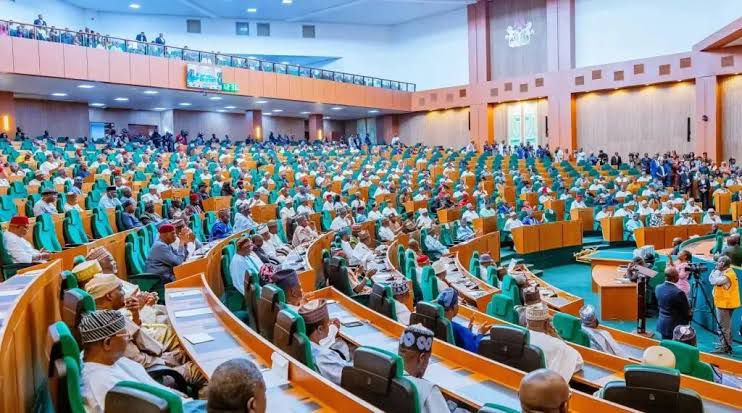
The House of Representatives has approved sweeping amendments to the Electoral Act, introducing stiffer penalties for vote buying and selling, including a minimum of two years’ imprisonment or a fine of N5 million, or both, as well as a 10-year ban from contesting elections.
The decision was taken during the clause-by-clause consideration of the report of the House Committee on Electoral Matters at the Committee of the Whole, presided over by the Deputy Speaker, Benjamin Kalu.
Under the amended Clause 22 (a and c), individuals involved in the buying or selling of votes or voter cards will now face significantly harsher sanctions than previously provided for under the law, where penalties were capped at N500,000 or a maximum of two years’ imprisonment.
In a move aimed at strengthening the transparency and credibility of elections, the House also adopted an amendment to Section 60(3) of the Electoral Act, mandating the Independent National Electoral Commission (INEC) to electronically transmit polling unit results to the INEC Result Viewing Portal (IREV) in real time, alongside physical collation of results.
The provision requires that electronic transmission be carried out simultaneously with physical collation, further tightening safeguards against result manipulation.
Lawmakers also amended the sanctions applicable to presiding officers who deliberately breach procedures relating to the counting, announcement and transmission of polling unit results. A new Section 60(6) prescribes a minimum fine of N500,000 or at least six months’ imprisonment, or both, for any presiding officer who willfully contravenes the law.
In addition, the House approved a clause mandating the release of election funds to INEC at least one year before a general election, a measure aimed at improving early planning and the efficient conduct of polls.
To curb electoral fraud, penalties for multiple voter registration were increased. Under the amended Clause 12(3), offenders now face a minimum fine of N100,000 or at least one year’s imprisonment, or both.
The House also extended the deadline for political parties to submit their list of candidates to INEC from 180 days to 210 days before an election, giving the commission additional time for verification and processing.
Furthermore, lawmakers approved provisions allowing the use of electronically generated voter identification, including downloadable voter cards with unique QR codes, or any other form of identification prescribed by INEC, for voter accreditation and voting.
Consideration of the remaining clauses of the Electoral Act (Amendment) Bill is ongoing.
Briefing journalists after the session, Chairman of the House Committee on Electoral Matters, Adebayo Balogun, disclosed that the House had abandoned plans to repeal the Electoral Act 2022, opting instead for targeted amendments after broader reform proposals failed to secure sufficient consensus among lawmakers and stakeholders.
The Electoral Bill 2025 was initially introduced to repeal the Electoral Act 2022 and enact a new electoral law, with the aim of consolidating recent electoral gains and addressing emerging challenges in Nigeria’s electoral system.
However, Balogun said several proposed reforms, including early voting, inmate voting, replacement of the Permanent Voters’ Card (PVC) with more technology-driven accreditation methods, and adjustments to election timelines, did not enjoy the support of a majority of lawmakers across both chambers of the National Assembly.
“As the legislative process progressed, it became evident that many of these far-reaching proposals did not command the support of the majority of members across the two chambers, nor did they enjoy sufficient consensus among key stakeholders,” he said.
 Instant News Blog
Leave a comment